Sunday, March 29, 2015

Growing Spring Thoughts

I would love to extract the clarity of my thought processes and ideas and put them in a format that people could understand, use, and participate in. Skills are simply methods of expressing these ideas and mastering skills means expert, succinct expression of these ideas. I aspire to manifest my ideals of self-sufficiency and environmental and social justice through this project, applicable even on the small scale. 


I strive for a basic sense of connectedness, justice, and satisfaction that comes from being close to the food source. I believe that understanding nature creates a deep sense of ingenuity, and proactivity. If you can remember that food comes from soil, water and sunshine, you have limitless power to transform. If it means breaking up asphalt to access the soils underneath or rerouting rain gutters to nourish an herb garden, then so be it. No matter the neighborhood you grew up in or education you received, there is hope in garlic sprouting out of the straw mulch and peach blossoms in the sunshine. Having the power to change systems and make them grow food would
here is hope in garlic sprouting out of the straw mulch and peach blossoms in the sunshine.


Tuesday, March 24, 2015

Refreshed Perspective


            I feel a flood of tingly gratitude for the wealth of adventures I was showered with last week. I feel rejuvenated with fresh perspective and brightly alive with realized potential. I traveled throughout the Pacific Northwest, staying with old friends and making new ones. I found myself constantly in awe of the emotions conjured by being in old places seen with new eyes. I found myself beyond delighted to be with companions, and even more tickled at the luxury of alone time to assess, sift, and explore myself. I will share a few snapshots and let your imagination take the rest:


         Beacon Food Forest is located on Beacon Hill in South Seattle. It is a public park managed by the people of Seattle. All of the plants in the park are edible public domain. There are monthly Saturday work parties which usually host upwards of 150 volunteers. Fruit trees, berry bushes, perennial edible greens and herbs, and even edible fungi are cultivated in this urban city park for anybody to indulge! I found myself spreading bark mulch, pruning, and turning compost in exchange for aromatic bunches of sorrel, oregano, kale, spinach, mint, and collard greens. If that's not an inspiration for the edible landscaping at the University of Utah, then I don't know what is!


      Plants are a source of light. Even though a thick layer of cloud cover usually graces the Olympic Peninsula, there is a sense of light everywhere where the moss can sprout and the trees can send down roots. It seems to me that the light that emanates from plants creates a subtly healing environment, whether you are aware of it or not. I had the opportunity to stay in our family's shared beach cabin on the Quinalt Reservation close to the Hoh Rainforest. The smell of ocean salt, fir tree bark, rich soils, and sweet green vegetation fill the air. The steady breath of the ocean creates a whispering undertone to all things said, thought, and witnessed here.


    As I progress into my next steps for the edible landscaping project, I feel ready. I feel animated and inspired to integrate the urban environment with the healing properties of nature. And that is the very essence of this project. I met with facilities yesterday. They agreed to take on the irrigation for the edible landscaping plot because it melds nicely with another of their projects. Facilities is highly efficient, controlled and precise. Grounds folks get things done. Working with them has given me huge insight into how these systems function. It makes the vision of a perennial edible landscape shimmer into perspective in a way that I do not necessarily see at the level of my normal academic projects. Compost, a few dozen plants, and a steel planter box, all tucked in with irrigation becomes a simple process, achievable and exciting. 


Saturday, February 28, 2015

Sustaining though Design

is a film about good design and how it can manifest change.
As I was designing the edible landscaping plot outside of the Sustainability Resource Center, I was thinking about design. Gardens are inherently mutable. They are growing, alive. They need attention. In this way, there is something to be said for designing a water-wise garden with few inputs such as fertilizer, insecticide, herbicide, and heavy water use. However, even the most hands-off design needs maintenance. Such is the nature of domestication. As I was setting up meetings with staff at the Sustainability Resource Center, I was thinking about it as product designing. A garden is a highly social product, just as malleable as it is physical form. Gardens need attention and care. Even if  that care is minimal: in this case, harvest and pruning.


This is what the landscape would look like without human intervention: sagebrush and sand. I have boiled it down to this: in order to have an aesthetic, intentional landscape used by the campus community, I am trying to design the smallest amount of necessary input in order to achieve the highest and best outcome. Like a native ecosystem, this plot should exemplify self-sufficiency and low water use. However, in order to make the best use of an important, currently unused, public space, implementing some maintenance is acceptable in return for exemplary food security.


Sunday, February 22, 2015

Landscape of Dreams, Harnessed, Implemented, Maintained

The Landscape is dry, gray, and wintry, although the season has been unpredictably warm and Springy. My thoughts wander to garden planning, crops to plant now so that we will be able to harvest them in months to come. The herbaceous shrubs and crocuses are greening up in landscaping areas across the city. I dream of those landscaping plots converted to low-maintenance, colorful, edible enhanced ecosystem-mimickers! These are places where people can come together to share common abundance of resources. As I dream, I plan. I measure. I discuss and design. The meeting last week provided a boost of information and access to amazing resources.

This week I hope to pull together design iterations, compile resources and calculate costs. Soon enough, the soils will support roots and vertical structures will provide lab space for the curious and creative minds in this place.

Tuesday, February 17, 2015

Progress Report

Today I met with three women experienced in the field of landscaping and groundskeeping. Sue Pope, Director of Grounds at the University, Marcene Younker, expert of the University's outdoor garden plan, and Michelle Cook, Red Butte Garden Specialist.

When we had planned this meeting, we had agreed to host it at the "visitor center". I assumed it was the campus visitor center in the Union Building, but after waiting for 8 minutes with no landscapers to be seen, I called Sue and learned that they had all gathered at the Red Butte Gardens visitors center. It took about 20 minutes to bike the circuitous route to the garden center, a brutal reminder of the severe lack of clear paths through campus and Fort Douglas. When I finally arrived, it was to a spacious, well-ventilated roomful of thriving plants. The three women stood in front of a tapestry-like living wall, observing it like a Georgie O'Keefe masterpiece. Sue gave me a reassuring side-hug as I convened with the group. I felt 30 minutes of anxiety dissipate as everybody introduced themselves and we started in talking about the edible landscaping project.

Three main items came to light.

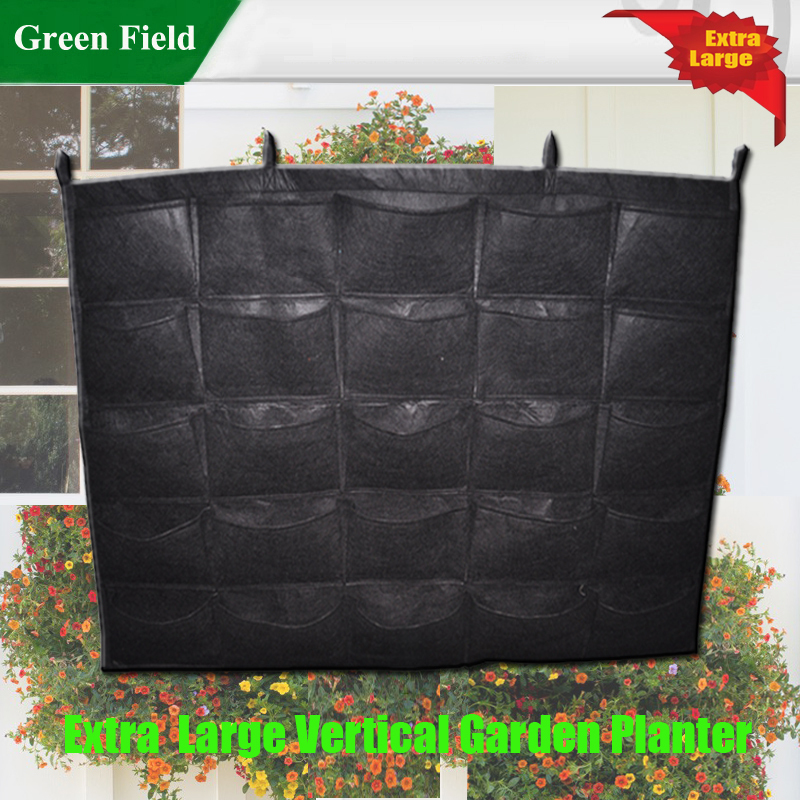
1. Pocket-style vertical garden planters are extremely expensive and high maintenance, especially outdoors. They are also not very edible-friendly. Although they make aesthetic gardens and are a great demonstration, I am tentative to jump into a commitment like this so soon.


The alternative that came out of today's discussion was the agreement that a grape arbor would make a great alternative. Grapes take about 3 years to establish and start producing. Iconic examples of thriving grapevines grace neighborhoods across Salt Lake City.  Planting two grape plants with a climbing structure on the entryway to the Sustainability Resource Center, I think, would create a kind of Secret Garden appeal.


2. Plants: My initial list of plants was seriously assessed and advised by the trio of landscapers. The lowest-maintenance, water-wisest, highest producing, and most beautiful plants came out in a list looking like this:

Fruiting Shrubs:
Serviceberry
Grape

Herbaceous/Other Shrubs:
Rhubarb
Lavender
Sage

Small Herbs:
Thyme
Oregano

Flowers:
Echinacea
Daylilies
Yellow Sego Lily
Dwarf Rose (hips)

3. A contingency plan is imperative. I am in touch with Jen Colby, the Edible Campus Gardens Coordinator. Her reluctance to commit to a new project is almost as strong as Sue's. My temporary presence on this campus is important to the initiation of this plot, but after I leave, it needs to remain and sustain. I am designing for low-maintenance: watering once a week and public grazing to control harvest overflow. But to put Jen's mind at ease, I think that Grounds needs to stay involved as well. Right now, there are a few tall native grasses and Oregon Grape shrubs on site. These are pruned yearly. If Grounds can continue to prune the bushes and shrubs once a year, I think it will provide a continued connection with sustainability for them and be highly beneficial. 


Sunday, February 15, 2015

This Black Soil, A Model of Resiliency in the Face of Adversity

The Bayview community existed in isolation from the rest of the developing world in a depressed state socially, environmentally and economically. Its transformation over the course of time was a radical change in all three of these interdependent spheres. The threat of something specific caused the uprising and empowerment of the community, which, in turn, changed the mentality of the community as a whole. The people became more socially empowered. The physical environment was much more amenable to comfortable living. The economy was bolstered by activity and the three spheres of sustainability were intact and progressing.

To begin, the community of Bayview is socially isolated. The community was established as a whole and it became a social expectation to live in poverty, without running water and many basic amenities. The social bubble effect was stifling to progress and impeded sustainable actions to enhance the community. When the community was threatened by the installment of a federal prison, they knew it would be a socially destructive force. Thus there was a move towards preserving the good in the community which created an awareness and a motion towards environmental improvement.

This leads to the next sphere of sustainability. Environmental events in the community of Bayview are especially impacting because, again, it is isolated. If a resource is over-harvested, then alternatives are scarce on an island. The nature of Bayview is its lack of accessibility and overall control. One natural tendency in a desperately isolated system is to exploit resources until they disappear. It appeared that this was the sad fate of Bayview’s natural resources until social action caused an influx of outside resources which boosted Bayview into a more steady state. With more infrastructure, and no prison to absorb all of the region’s resources, the community can now more effectively steward the land and its resources.

Finally, the economic sphere of Bayview was radically transformed as a result of (and along with) the enhancement of the social and the environmental spheres. Without the implementation of the federal prison, the community realized its own potential to create local revenue that would much more effectively support the community.

Environmental Justice is defined roughly as “fair treatment and meaningful involvement of all people regardless of race, color, national origin, or income with respect to the development, implementation, and enforcement of environmental laws, regulations, and policies”. Many communities are marginalized and exploited socially because their natural resources are sought after and cheap. This is exemplified specifically in Bayview. The title of the documentary, “The Black Soil” implies fertility and potential for growth, as well as exploitation. The film clearly portrayed the intended abuse of the community. This Black Soil is a perfect example of environmental justice in action.

Saturday, February 7, 2015

Imagine each department with their own flowerbed...

The Sustainability Resource Center moved! Its last location in the oldest building on campus did not provide much awareness or accessibility. Now, the center is located on Commonwealth Avenue, across from Architecture and Planning. The location is close to the library and the main plaza. At the moment, this is what it looks like:


The landscaping is wearing its winter coat. The concrete is plain, and the space is unremarkable to say the least. However, as I stated in my last post, there is great opportunity for thriving edible landscape and creation of place here. At most, this whole landscaped area could be converted. The pre-existing bunching grasses and landscape trees could accompany berry bushes, herbal medicinals, flowering pollinators, and perennial vegetables. And at the very least, hanging vertical structures could liven up the entrance and provide aesthetic, healthy snacks for passers by. 

Hanging gardens could easily attach to these concrete poles and soak up all the floodwater that saturates in precipitation. 

These boxes have historically drained poorly and lead to flooding in the lower entrance area. Additional organic matter and living plants could eliminate these problems and utilize Utah's precious water with the respect it deserves. Redirecting rainwater is a large component of edible landscaping. Making a beautiful, artistic water catchment system piping into this garden could be a really great way to demonstrate the applied ethos of the SRC.

This Monday, I will be meeting with Myron Willson, the director of the SRC and Sue Pope, director of University of Utah grounds crew. Sue experiences pressure from all sides to make the campus look one way or another. An image of homogeneity and clinical cleanliness is the expectation for most large universities. But with principles of urban ecology and permaculture, the campus can be much more purposeful, attractive and sustainably interactive.